Welcome to Mining 101
New to Bitcoin mining? Don’t worry — you’re in the right place. Mining can sound complex at first, but when you break it down step by step, it’s really about three things:
- Securing the Bitcoin network,
- Solving puzzles,
- And earning rewards.
This page is your quick-start guide to understanding the essentials. And for each step, we’ll link you to our in-depth cornerstone posts so you can dig deeper when you’re ready.
Step 1: What Is Bitcoin Mining?
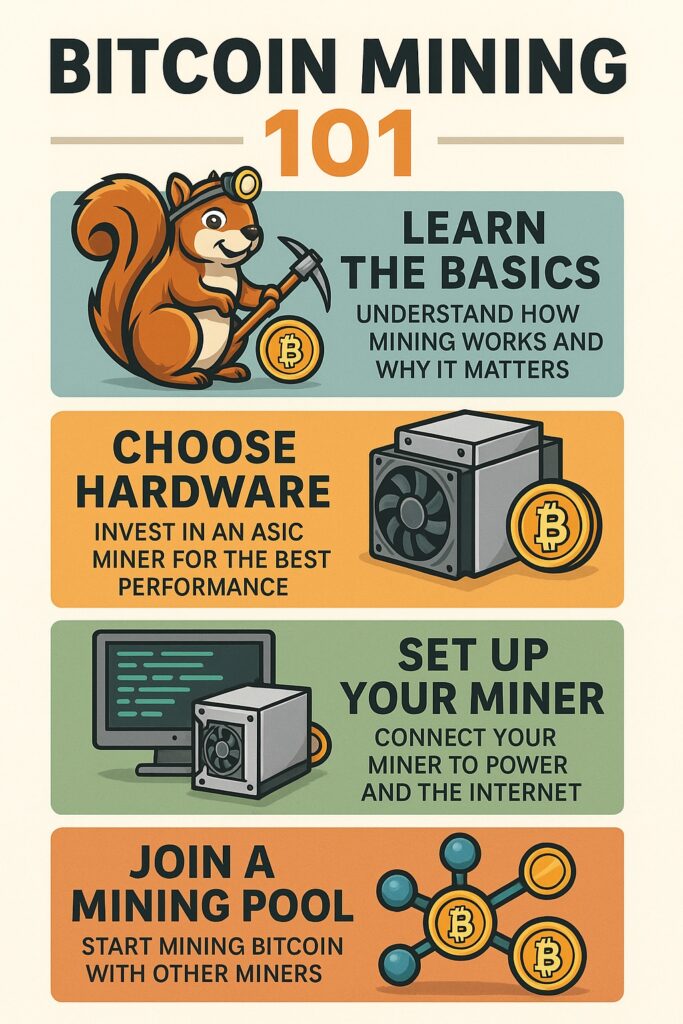
At its core, mining is how Bitcoin transactions get verified and added to the blockchain. Miners use specialized machines to solve puzzles, and in return, they earn rewards in Bitcoin.
👉 Learn more: What Is Bitcoin Mining (Cornerstone)
Step 2: The Tools You Need (ASIC Miners)
Forget your old laptop — Bitcoin mining today requires ASICs (Application-Specific Integrated Circuits). These machines are designed to do one thing only: mine Bitcoin.
Think of them as squirrel superpowers. 🐿️
👉 Learn more: ASICs vs GPUs: The Right Tools for the Job
Step 3: Understanding Hashrate
Hashrate measures how many guesses your machine makes per second to solve Bitcoin’s puzzle. Higher hashrate = more chances at rewards.
👉 Learn more: What Is Hashrate and Why Does It Matter? (Cornerstone)
Step 4: Joining a Mining Pool
Unless you have a massive farm, mining solo isn’t practical. Mining pools let you team up with others to share rewards and earn more consistently.
👉 Learn more: Mining Pools vs. Solo Mining (Supporting)
Step 5: Difficulty and Rewards
The Bitcoin network automatically adjusts its difficulty so that blocks are mined every 10 minutes. Over time, rewards also shrink thanks to the halving — but scarcity makes Bitcoin more valuable.
👉 Learn more:
Step 6: The Bitcoin Supply Cap
Bitcoin is capped at 21 million coins. That’s it. No one can print more, and halvings make each coin scarcer over time. This is one of the biggest reasons Bitcoin has value.
👉 Learn more: Bitcoin Supply: Why It’s Capped at 21 Million (Cornerstone)
Step 7: Getting Started as a Beginner
If you’re ready to try mining yourself:
- Choose a reliable ASIC miner (Antminer S21+ or Avalon Q are great starting points).
- Find a mining pool you trust.
- Secure cheap, stable electricity.
- Set up proper cooling and ventilation.
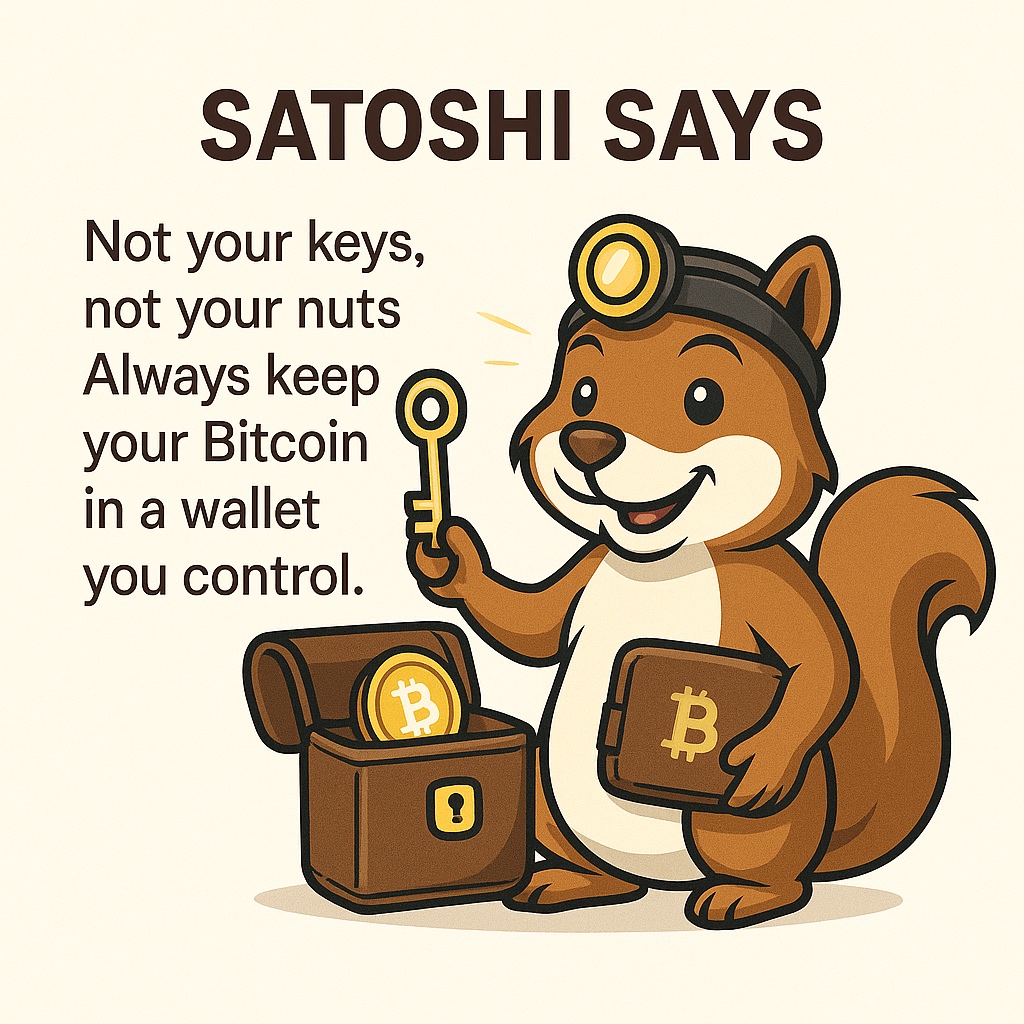
- Store your Bitcoin safely (remember: not your keys, not your nuts 🐿️).
Closing: Start Small, Learn Big
Mining can feel overwhelming at first, but every expert miner started as a beginner. The best advice? Start small, learn the basics, and grow as you go.
And as Satoshi Squirrel says:
“Stack sats like you stash nuts. A little at a time adds up big.”
👉 Explore our Blog Library for more guides, stories, and tips.