
Past Halvings: What History Tells Us About the Future
Introduction
If you want to understand Bitcoin’s future, one of the best places to start is its past — specifically, the halving events that happen about every four years. Each halving has dramatically reshaped Bitcoin’s mining landscape, investor sentiment, and price cycles.
At Florida Mining Solutions, we think halvings are like seasons in the Bitcoin forest. Each one changes how squirrels (miners) collect nuts (rewards) — and history shows that while the short term can feel tough, the long-term results are powerful.
A Quick Refresher: What’s the Halving?
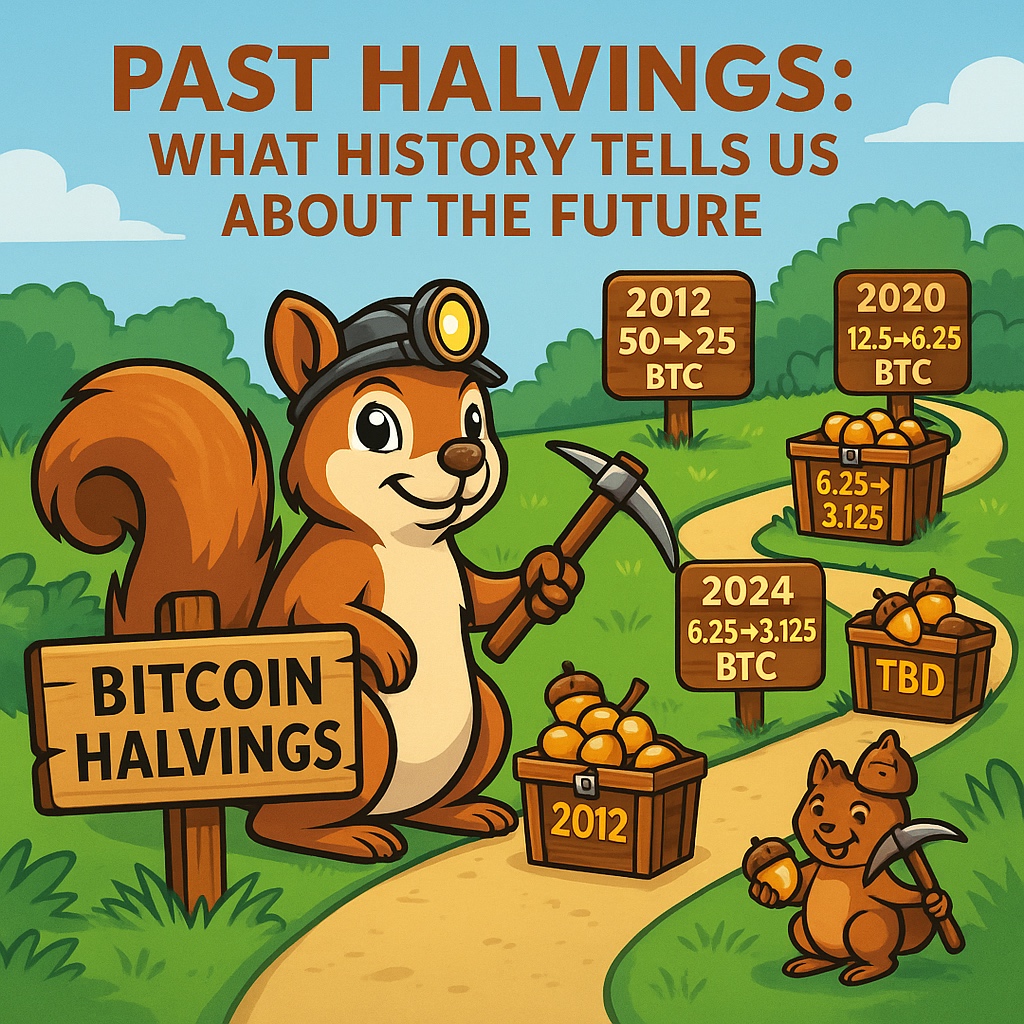
Every 210,000 blocks (~four years), Bitcoin cuts miner rewards in half.
- 2009 → 50 BTC per block
- 2012 → 25 BTC
- 2016 → 12.5 BTC
- 2020 → 6.25 BTC
- 2024 → 3.125 BTC
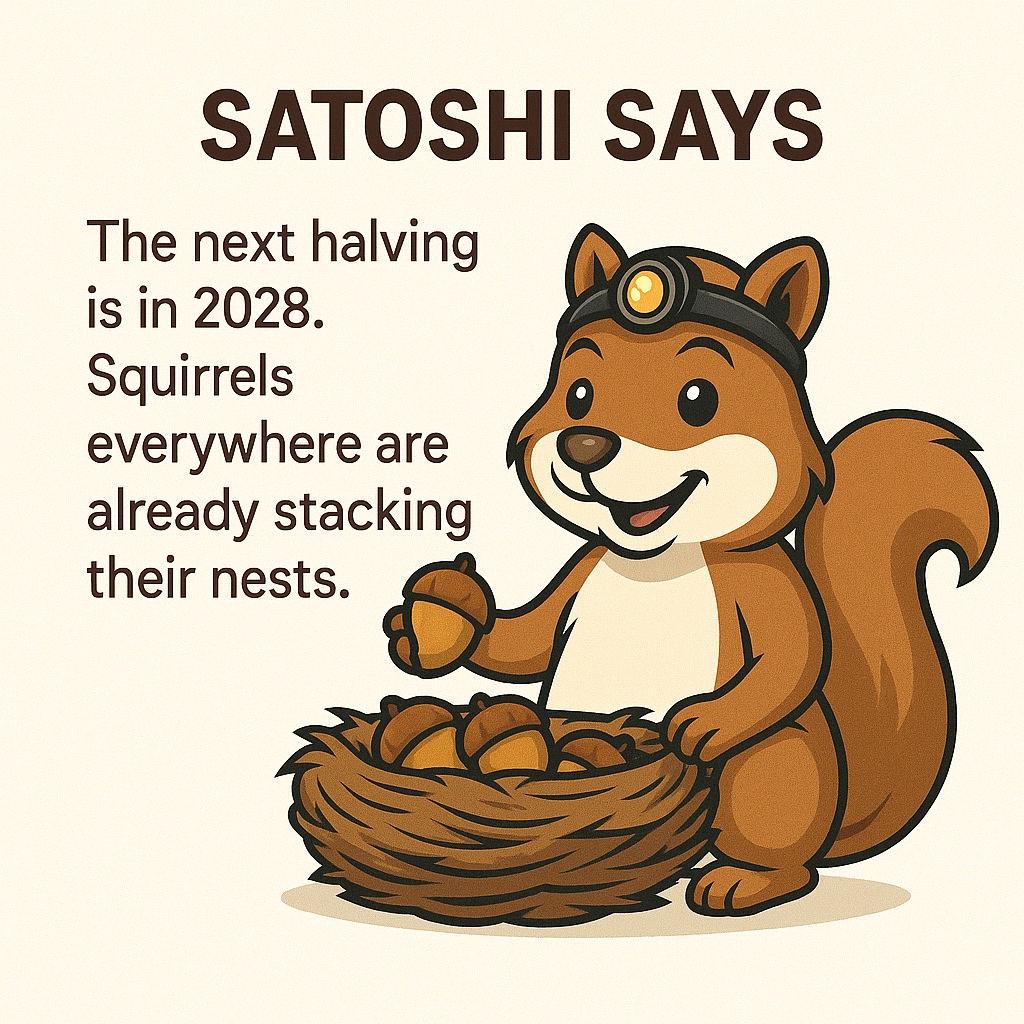
- 2028 → 1.5625 BTC (projected)
This process will continue until all 21 million Bitcoin are mined around the year 2140.
(If you need the full breakdown, check out our cornerstone post: “The Halving: Why Rewards Get Cut in Half.”)
The First Halving (2012)
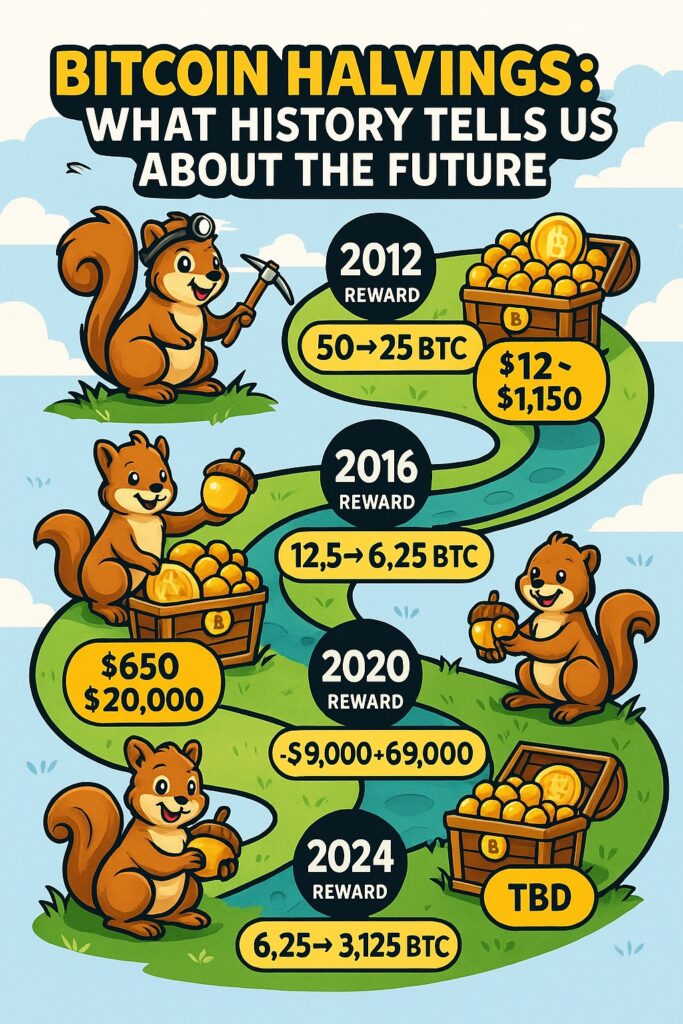
- Block reward cut: 50 → 25 BTC
- Price before halving: ~$12
- Price after halving (2013 peak): ~$1,150
Impact:
- First major test of Bitcoin’s scarcity model.
- Miners adjusted quickly to lower rewards.
- Sparked Bitcoin’s first big bull run and major media attention.
Squirrel Analogy 🐿️
It was like squirrels suddenly getting half as many acorns, but discovering each nut was worth more than ever before.
The Second Halving (2016)
- Block reward cut: 25 → 12.5 BTC
- Price before halving: ~$650
- Price after halving (2017 peak): ~$20,000
Impact:
- Mining difficulty rose as more efficient ASICs entered the market.
- Institutional interest started trickling in.
- Bitcoin broke into mainstream consciousness during the 2017 rally.
Squirrel Analogy 🐿️
The forest got crowded with new squirrels using better tools. Even though each nut was smaller in number, demand skyrocketed.
The Third Halving (2020)
- Block reward cut: 12.5 → 6.25 BTC
- Price before halving: ~$9,000
- Price after halving (2021 peak): ~$69,000
Impact:
- Bitcoin became a serious global asset.
- Institutions like Tesla and MicroStrategy started buying.
- Mining boomed worldwide, though energy debates also intensified.
Squirrel Analogy 🐿️
Fewer acorns, but now even the biggest creatures in the forest wanted them — not just squirrels.
The Fourth Halving (2024)
- Block reward cut: 6.25 → 3.125 BTC
- Price before halving: ~$63,000
- Price after halving (still unfolding in 2025): TBD
Impact so far:
- Miners are adjusting to leaner rewards.
- Difficulty remains high, but efficient machines like the S21+ and Avalon Q help smaller miners stay in the game.
- Market watchers anticipate a repeat of the historical post-halving bull run — time will tell.
What History Teaches Us
Looking back, we can draw some consistent lessons:
- Scarcity works. Each halving reduced supply and, after a lag, boosted value.
- Adapt or exit. Less efficient miners drop out, while efficient setups thrive.
- Cycles repeat — but not identically. Each halving builds on the last, but new players (retail, institutions, governments) change the dynamics.
- Patience pays. Price surges usually come 12–18 months after the halving, not immediately.
What It Means for 2028
If history is any guide:
- Rewards will fall again (to 1.5625 BTC).
- Inefficient miners may struggle, while efficient ones grow stronger.
- Scarcity should continue driving demand upward, even if cycles differ in timing.
For miners today, the message is clear: stack sats now and plan for leaner harvests later.
Conclusion
Bitcoin halvings may look like bad news at first — cutting miner rewards in half isn’t easy. But history shows that each halving ultimately strengthens Bitcoin’s scarcity and value.
As Satoshi Squirrel says:
“Every halving makes the stash smaller, but the nuts left behind only grow more precious.” 🐿️
If the past is any guide, the forest ahead is worth exploring — especially for those prepared to adapt.


Recent Comments